What Was the Manhattan Project? The Secret Program Behind the Atomic Bomb
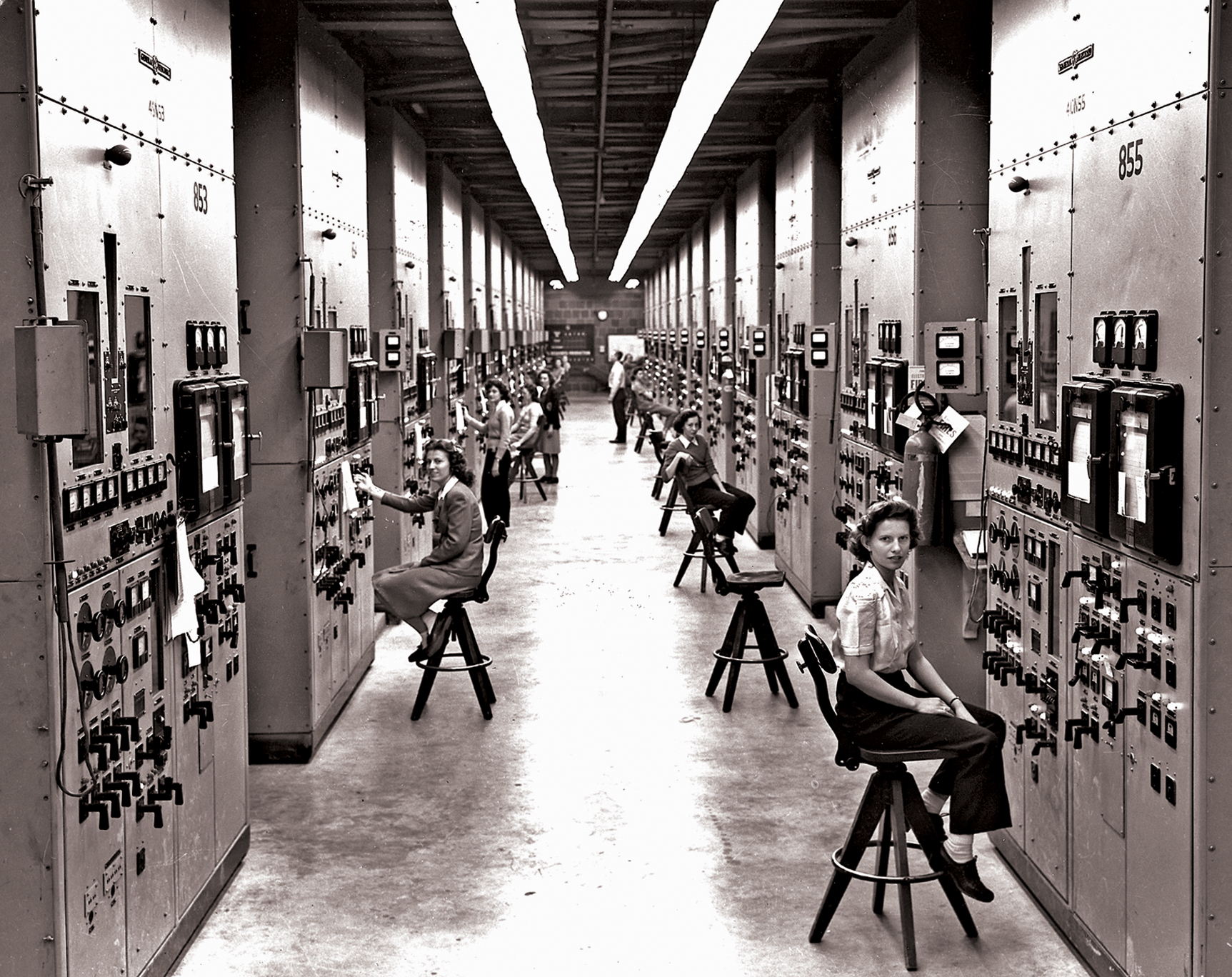
Calutron operators at the Y-12 plant in Oak Ridge, Tennessee, during World War II. Photo: Ed Westcott / U.S. Army Manhattan Engineer District, public domain. Image record.
During World War II, the Manhattan Project brought scientists, industry and a vast workforce together at secret sites to build the first atomic weapons. It pursued uranium and plutonium in parallel, culminating in the Trinity test in July 1945. Its legacy includes nuclear arms, displaced communities and radioactive waste.
Why did the Manhattan Project begin?
In December 1938, researchers in Germany discovered nuclear fission: the splitting of an atomic nucleus, which releases energy. Scientists soon recognized that a chain reaction might make a weapon of unprecedented power possible. In August 1939, physicist Leo Szilard drafted a warning that Albert Einstein signed and sent to President Franklin D. Roosevelt. The possibility that Nazi Germany might pursue such a weapon gave the warning urgency.
The U.S. government funded research and assessed whether an atomic bomb could be built. As World War II intensified, it committed to an industrial effort.
In August 1942, the Army Corps of Engineers established the Manhattan Engineer District to turn laboratory findings into a weapon. General Leslie Groves directed the military and industrial program; physicist J. Robert Oppenheimer later led its weapons laboratory. The name “Manhattan Project” came from the Army district in New York where the effort was organized, although its major production sites were built elsewhere.
In December 1942, a team led by Enrico Fermi achieved the first controlled, self-sustaining nuclear chain reaction at the University of Chicago. That experiment showed that a reactor could sustain fission; it did not itself produce a bomb. The project still had to obtain sufficient fissile material and develop a working weapon design.
Where were the Manhattan Project’s main sites?
The project pursued two materials at once because neither route was guaranteed to succeed. At Oak Ridge, Tennessee, workers enriched uranium. At Hanford, Washington, reactors produced plutonium. At Los Alamos, New Mexico, scientists and engineers designed the weapons and worked to bring the materials together into functioning devices.

The B Reactor and water treatment area at Hanford, Washington, on June 2, 1944. Photo: U.S. Army Corps of Engineers / National Archives, public domain. Image record.
These were industrial communities as well as laboratories. Tens of thousands of people built facilities, operated equipment and supported the work. Secrecy was so strict that many workers knew only their own tasks, not the final purpose. The program depended on their labor as much as on the scientists whose names later became famous.
That expansion carried costs beyond the military budget. The federal government displaced residents and Indigenous communities to build its major sites. Black workers at Oak Ridge and Hanford also faced segregation and unequal housing and employment conditions. Those histories are part of the project, alongside its scientific achievements.

Isidor Isaac Rabi, Dorothy McKibbin, J. Robert Oppenheimer and Victor Weisskopf at Oppenheimer’s Los Alamos home in 1944. Photo: U.S. Department of Energy, public domain. Image record.
What happened from Trinity to Hiroshima and Nagasaki?
By mid-1945, the facilities had produced enough material for atomic weapons. On July 16, 1945, the project detonated a plutonium device at the Trinity test site in New Mexico: the world's first nuclear explosion.

The Trinity test in New Mexico, July 16, 1945. Archival color photograph by Jack W. Aeby; digitally restored scan, public domain. Image record.
Nazi Germany had surrendered in May, but the war against Japan continued. The uranium produced at Oak Ridge was used in the bomb dropped on Hiroshima on August 6. Plutonium produced at Hanford was used in the bomb dropped on Nagasaki on August 9. These were the first and, to date, only uses of nuclear weapons in war.
The bombings killed large numbers of civilians and caused lasting harm from burns, injuries and radiation. The decisions to use the weapons, their effects on the two cities and their role in Japan’s surrender require a separate historical examination.
What is the Manhattan Project’s legacy?
The project demonstrated that a government could combine research, industry and military command on a vast scale to create an entirely new class of weapon. It also began the nuclear age: a period shaped by arms competition, deterrence, radioactive contamination and continuing arguments over the ethics of nuclear war.
The Manhattan Project's legacy also includes displaced communities, unequal treatment of workers and enduring radioactive waste at former production sites. Its history is both the story of a rapid scientific and industrial transformation and the record of the people who bore its costs.
Sources
- National Park Service — “What is the Manhattan Project?”. Origins, sites, workforce, Trinity, bombings and legacy.
- U.S. Department of Energy — “Timeline of Events: 1938–1950”. Dates of the Army district, Trinity and the atomic bombings.
- U.S. Department of Energy — “Metallurgical Laboratory at the University of Chicago”. Chicago Pile-1 and the first controlled chain reaction.
- National Archives — “Manhattan Project Notebook”. The original notebook documenting the first controlled, self-sustaining chain reaction on December 2, 1942.
- National Park Service — “About Oak Ridge”. Displacement, segregated workforce and uranium production.
- National Park Service — “About Hanford”. Plutonium production, displacement of local and Indigenous communities, and workers' conditions.
- National Park Service — “Legacies”. Nuclear science, radioactive waste and health effects.


Comments
Post a Comment