How CurrentFront Verifies Breaking Geopolitical Claims
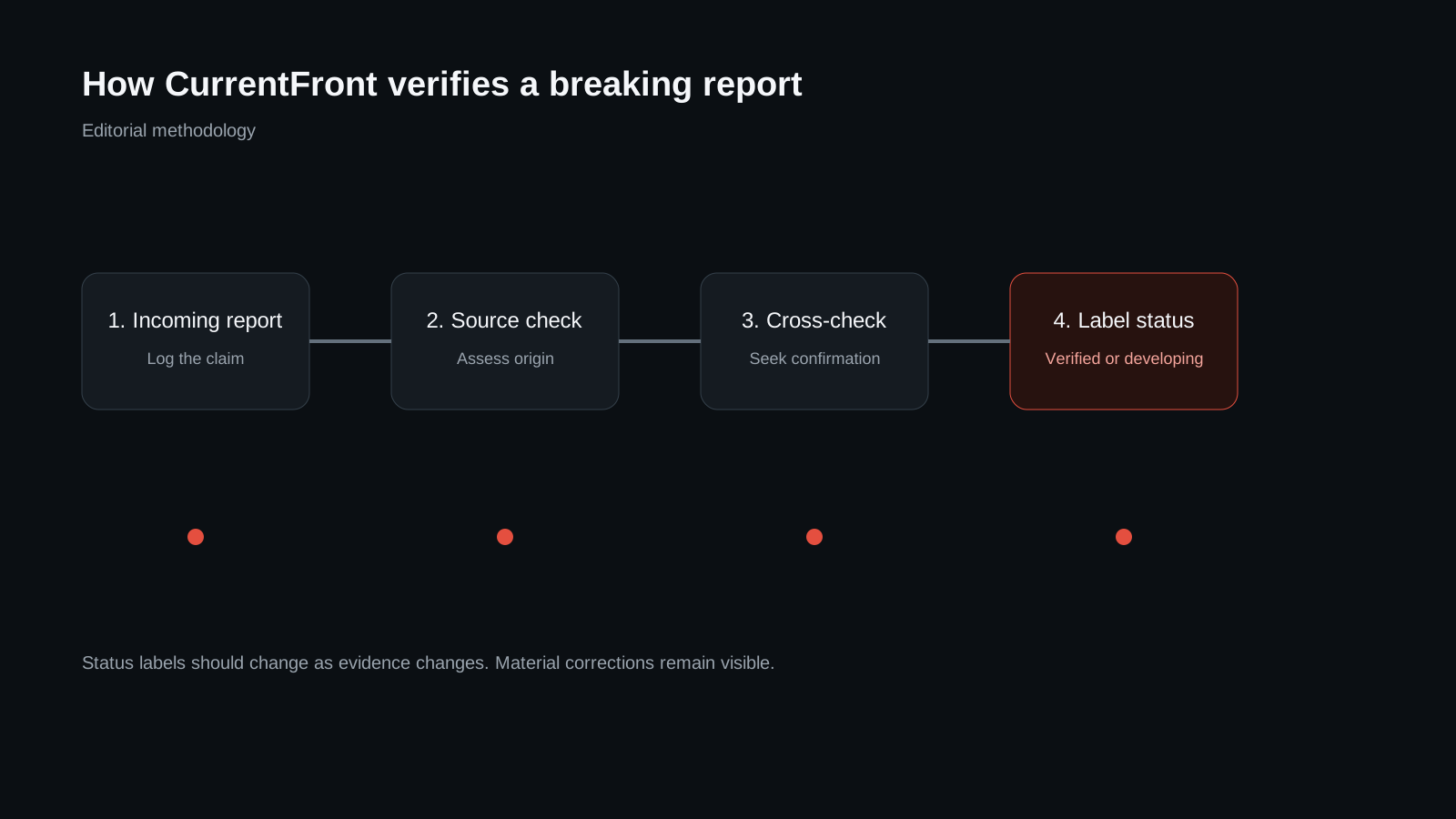
Readers need to know which parts of a breaking geopolitical report are established, disputed or still being checked. CurrentFront’s editorial method starts with the source and the evidence behind each claim.
1. Record the claim before repeating it
Incoming reports are treated as claims first. The source, time, original wording and supporting evidence should be preserved before a summary is written.
2. Separate primary evidence from repetition
Several websites repeating one original claim do not provide several independent confirmations. A primary document, an official statement, independent reporting and secondary repetition carry different kinds of evidence.
3. Make status visible
Stories can change quickly. Articles may therefore identify information as verified, developing, disputed or corrected, depending on the available evidence.
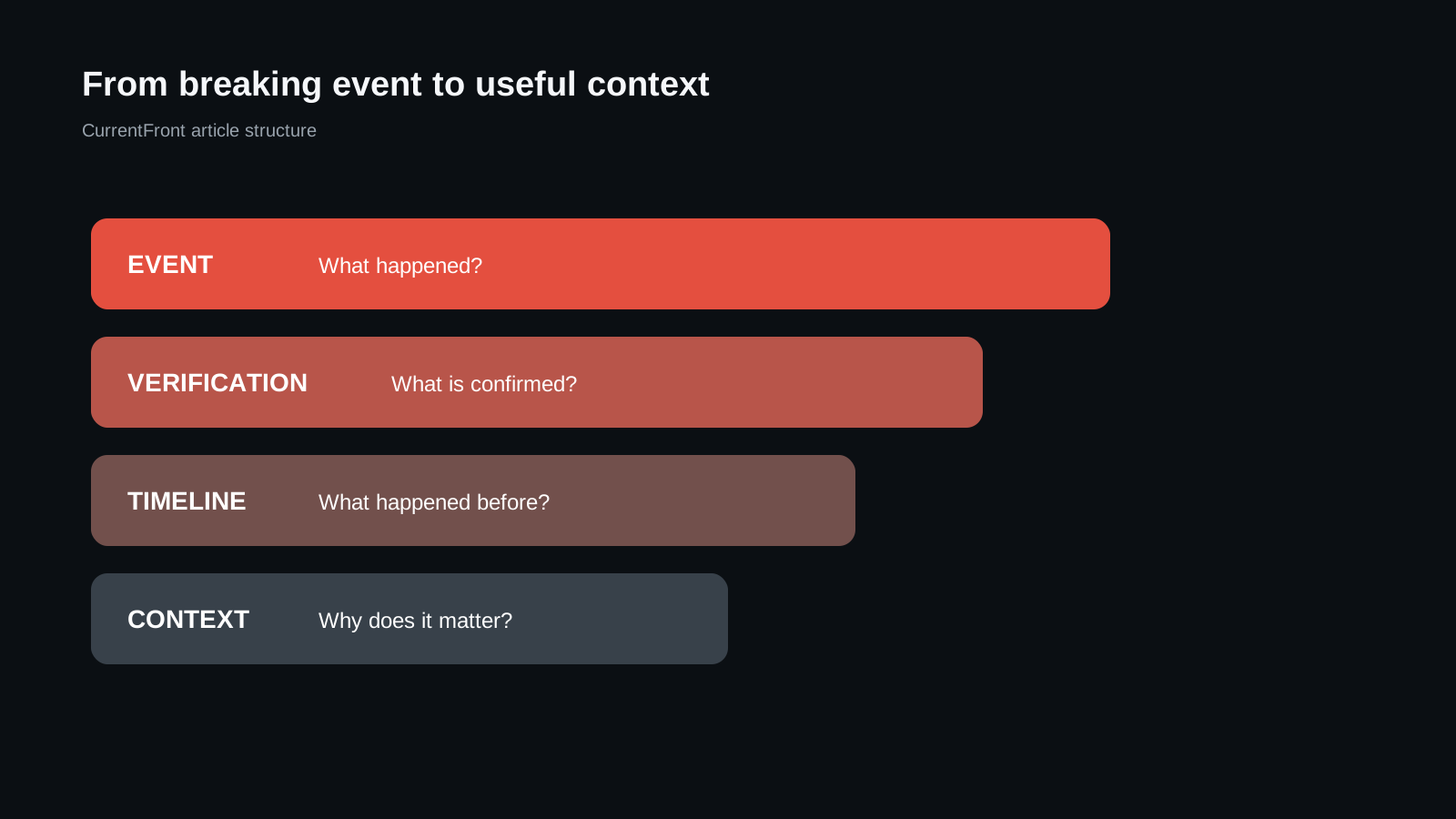
4. Add context without burying the event
Breaking coverage should answer what happened first. Supporting explainers, timelines and conflict hubs can then provide the historical, geographic and geopolitical context needed to understand why the event matters.
5. Keep corrections visible
When material information changes, the correction or update should be clear to the reader rather than silently replacing an earlier version.
- Primary documents and direct evidence
- Official statements, clearly attributed
- Independent reporting from established outlets
- Open-source material that can be independently checked
How to interpret a verification label
An official statement can establish that an authority made an allegation without independently proving that allegation. For example, verification that a ministry blamed another government does not establish who carried out an attack. Readers should check the attributed claim, the supporting evidence and the reporting date separately.
This article describes CurrentFront's editorial methodology. It is not a report about a specific conflict or current military event.


Comments
Post a Comment